
Why Paper Planners Matter More Than Ever in an AI-Filled World
This week we're chatting all about navigating AI as a creative and why paper planning matters more than ever. Tune in to hear more on:
Why paper planners are more essential than ever in our tech-saturated world
How writing things down boosts creativity, clarity, and mental well-being
The surprising ways AI is reshaping our habits and what to do about it
Real talk on digital overwhelm, constant notifications, and reclaiming your focus
The brain science behind pen-and-paper planning and how it supports deeper thinking
A refreshing hybrid approach to planning that blends analog joy with digital ease
Why Paper Planners Matter More Than Ever in an AI-Filled World
Lately, it feels like we’re at a tipping point.
AI is everywhere. New tools, platforms, features, and “smart” upgrades pop up daily, promising to save us time, do the work for us, and even think for us.
And while it is pretty amazing (and yes, I do use it in my own business), there’s something quietly powerful about stepping away from the screen and coming back to something more tactile, more intentional:
Paper planning.
Today I want to talk about why paper planners aren’t just still relevant, they’re becoming more essential than ever. In a time where our attention is constantly being tugged at and outsourced, paper planning brings us back to our inner voice, sharpens our focus, and creates a kind of analog sanctuary for our thoughts, creativity, and strategy.
Let’s talk about what’s really going on and why reclaiming your time with pen and paper might just be the most radical productivity move you can make this year.
AI Isn’t the Enemy But It’s Not Your Brain Either
Let’s get this out of the way: I’m not anti-AI. I use it often—mainly to help turn podcast transcripts into blog posts (hello!) or to repurpose content more efficiently.
But here’s the thing: just because AI exists doesn’t mean we should stop thinking for ourselves.
The tech we have today is remarkable but we’re often adopting it faster than we truly understand it. And there’s a real danger in letting it replace the essential parts of being human-like intuition, critical thinking, decision-making, and deep focus.
Just like we didn’t stop walking when cars were invented, or stop writing letters when email showed up, we don’t have to ditch the analog practices that have always supported our minds and creativity.
Are You Outsourcing Your Thinking?
Every time we reach for AI to make a decision, solve a problem, or generate an idea, we’re outsourcing more than just tasks, we’re handing over mental processing we need for growth.
Writing things down in a paper planner is more than a cute ritual, it’s a cognitive process. It’s how we encode information, sort through our thoughts, and clarify what matters.
If everything lives in your brain or in an app, there’s no spaciousness to reflect, sift, or process. You're just reacting instead of creating.
Paper Planning Reconnects You With Your Mind
There’s a kind of magic in writing by hand. It gives your thoughts space to breathe and evolve. It allows your brain to work in the background even after you’ve stepped away from the page.
It’s why I do regular brain dumps and why I always recommend giving yourself time to process after a journaling session or a deep planner session. So often, the clarity and answers you’re seeking come later, in the shower, on a walk, or (in my case) in the bathtub.
The paper is the catalyst, not just a container.
The Mental Clutter is Real and Planners Help Clear It
Our brains were never meant to be storage units. Yet we constantly ask them to hold dozens (or hundreds) of ideas, to-dos, feelings, and decisions.
And when you combine that with the pressure of always being “on” and “connected” thanks to smart apps, notifications, and digital everything... it’s no wonder burnout is everywhere.
Paper planning helps you offload that cognitive overload and make sense of it.
It’s a way to:
Capture ideas before they vanish.
Process your goals and plans intentionally.
Strategize with clarity.
Slow down enough to hear yourself think.
But don’t I need fancy tools or Project Management Software?
Nope. And also, kind of yes—but not for everything.
Here’s how I personally combine the two:
Ideating, planning, and reviewing? That’s for paper.
Breaking down projects into workflows, SOPs, and recurring tasks? That’s for digital tools like Google Tasks.
The paper is for the thinking. The digital is for the execution.
And I really believe that when we try to skip that paper-thinking step and let AI just do it for us, we miss the part where we develop the skills that grow our businesses, fuel our creativity, and give us a sense of grounded momentum.
Planners Help You Conceptualize Time
Especially if you’re neurodivergent, visualizing time is HARD.
Everything feels like it’s happening at once. Time blocking on paper helps me see the flow of my day and how much space things actually take up.
There’s something deeply helpful about writing down how your week looks, what’s actually realistic, and how much energy you’ll need to show up well. You start to notice patterns in your own rhythms and stop overcommitting out of default.
Analog Time Is Self-Connection
When I talk about paper planning, I’m not talking about another to-do list or color-coding for the sake of aesthetics (although stickers are always welcome). I’m talking about actual time with yourself, a space where you get to have conversations with your own thoughts.
That’s something no AI can replicate.
And it’s why I believe paper planners are more important than ever.
Planner Recommendations
If this speaks to you and you want to start (or return to) a more analog planning routine, I’ve got you covered.
✍️ My bestselling Daily Productivity & Brain Dump Book is a great place to start. It’s undated, with a two-page spread each day: one for brain dumping, one for focused productivity.
📒 If you’re looking to set weekly, monthly, or quarterly goals and get a bird’s eye view of your projects, the Mindful Productivity Guide is a wonderful complement.
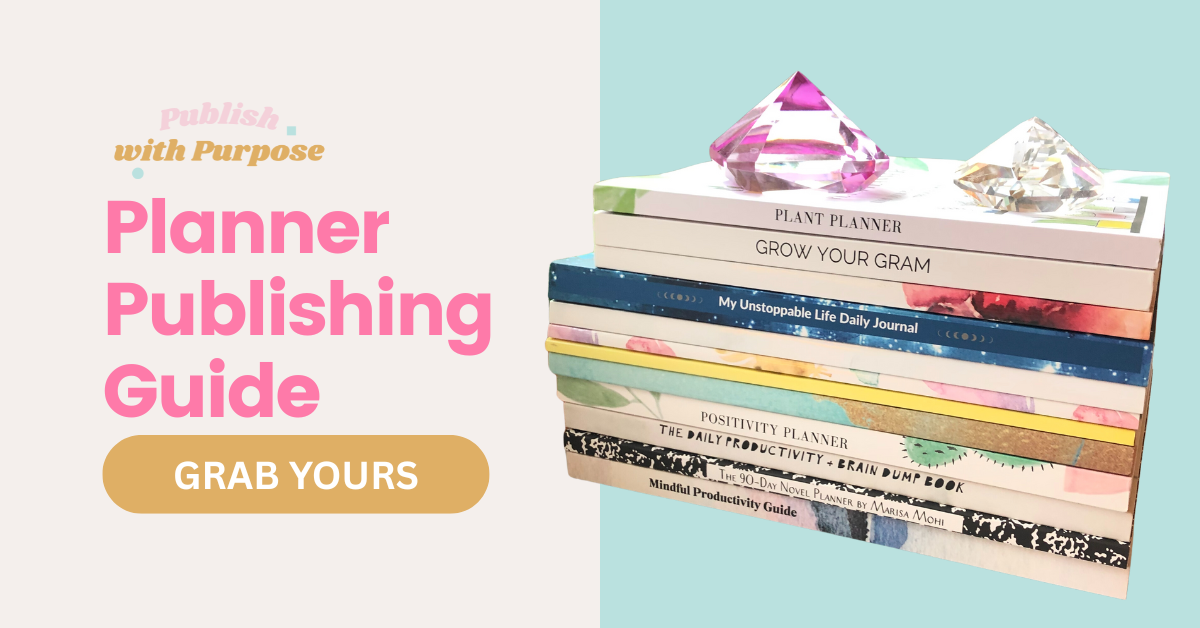
And if you’re feeling inspired to create your own planner (because YES, there’s room for your idea), check out my free Planner Publishing Guide here.
Final Thoughts
We don’t have to choose between analog and digital, we just need to be intentional about what we’re outsourcing and what we’re keeping sacred.
Writing things down in a paper planner isn’t old-school, it’s a powerful, mindful act of reclamation. It helps you cut through the noise, clarify your path, and reconnect with your inner wisdom.
So if you’re feeling overwhelmed, disconnected, or like you’ve lost your footing in a sea of “smart” tools...
Start by picking up a pen.
-
You are listening to episode 216 of the Mindful Productivity podcast. I'm your host, Sarah Steckler. And this week, I want to talk to you about why paper planners are more important than ever and how and why you should use yours more. In a world where AI is becoming more and more relevant and we're seeing things grow tremendously, I want to talk about what it means to reclaim your analog time and come back to paper planning, why it matters for your mind, your mental health, your creativity, your business and your productivity, and how coming back to using a paper planner and writing more can help all of those things and improve your quality of life. Let's go ahead and get into it.
Welcome to the Mindful Productivity podcast. I'm your host, Sarah Steckler, and this is the place to be to live a more mindful and productive life. If you're ready to turn daily chaos into calm and start your days with intention, then get ready to join me as we dive deep into mindful living and personal productivity. It's It's time to connect with your true self so you can live the life you want to live. And it all starts now.
Welcome back to the podcast. I thought it would be fun this week to have a bit of a conversation about AI, what's coming, and also what it means to reclaim our analog time and come back to using writing paper planners, writing things down, and sometimes moving away from digital tools. This podcast is not going to be me bashing AI or saying that they're trying to predict what's coming in the future. There's absolutely no way I could do that. And one thing I always think back on, too, is during one of my first jobs, I had a boss who used to work in a cyber security in the military. And one thing that always stuck with me was how he told me that wherever we are now, whatever public access people have to technology now, we're usually 10, 20, 25 years way ahead of that. What the military has access to, what other governments and countries have access to, is usually way ahead of what the everyday person can see and use as a resource. So there's likely so much more that AI can do that we don't even know about. That would probably terrify us right now.
But in terms of you, the everyday person and citizen of your community, and how you use it as a creative and as a business owner, I think it's worth talking about. So I've got a couple of notes here. And my cat Dublin is being a super cute doubling and making tons of noise in the background. I have a plastic bag in here somewhere, and she has totally found it, and she loves flopping down on it. So if you hear any rustling, that's definitely her. So one thing that I wanted to bring up is just because AI exists, doesn't mean that we need to outsource all of our intelligence or our critical thinking skills. When we have seen the invention of other tools in the past, like when we saw the industrial revolution, we saw cars, we saw airplanes, we saw all these manufacturing tools come into play, that absolutely quickly threw us into a trajectory of being able to do those things faster, being able to go more places farther, quicker, more efficiently, and safer. But that also didn't make us stop doing the basic human things we've always known, right? It didn't make us stop walking or traveling in other ways.
And when we saw the invention of the Internet, we also saw it pooled into a lot of things. But it didn't stop us from doing other things like writing letters, still making phone calls, all of that. Obviously, with every invention of technology or social change, you're going to see things die out, you're going to see things change. But one thing that I find really, really fascinating that I I haven't seen a lot of people talk about yet with AI is that it's the first technology where it almost seems like people are trusting it quicker than they even know how to use it. When I was a kid in the '90s, I just have these vivid memories of the Internet and it becoming a thing and being able to use it and not understanding what it was. And I remember we had these commercials that would come on, like it's coming, the World Wide Web, and I don't even know what that meant. But at the same time, people were also really weary of it. And I think the same is true of AI, but I think it's fascinating how many people I see diving into AI, especially companies.
And I think bigger corporations are using AI agents now. There's been so many articles coming out about how these have failed, how they're using them to respond to emails or make certain decisions in businesses. And they're making tons of mistakes. And they're actually costing companies quite a bit of money, even though they just fired a percentage of their workforce in order to try and save money by using an AI structure. I also think we're in the phase of early adopters still. Ai is cool. It's new. It's popular. It's mind-blowingly amazing. And there's trends like, hey, did you know if you put in this prompt, you can develop this photo of your dog. And it's cool. And people want to try it and use it, right? But also, I love the term AI I flop because I definitely think that's something we're seeing. And I definitely think that AI is overtaking a lot of different industries. For example, if you go to AppSumo right now, it seems like every single software tool is something AI or blah, blah, blah, content AI, this and that AI. And I personally am not jumping on the train of investing in much of those products, mainly because I think that a lot of people right now are using GPTs and OpenAI to create things.
And really, I think that they're all using a lot of the same technology. So if you're buying a specific tool that does a specific thing with AI, it's really not that different than something you could probably do in ChatGPT yourself. And I'm overstating here. But I think we're in this really early phase where people are just throwing time and money at AI in hopes and hopes of making a recurring revenue, turning something around, getting other investors to purchase something they've created. And again, you could probably make the same argument for a lot of different types of technology in the past But I'm just taking a beat. I do use AI in my business. Primarily, I've been using Google Gemini to take my podcast transcripts, and sometimes I use it to help me write blog post. And I find that it works best when I use a transcript because it keeps my voice and my tone and it's all of my same ideas and all of that. And I do, I have used it in a couple of different other ways, but I also still I think there's part of me that really wants my business to be more human first.
And again, that's not a virtue signaling thing. I'm not saying that if you do use AI, it's a bad thing. But I don't know, I'm all over the place here with my thoughts, but that's just where I'm going. And we've seen similar integrations on the Internet before, with different apps. It's so funny to me that some people have... You can have a washer and dryer now, maybe you have one, that will connect to your phone. It will connect to an app. And then you can be notified when your damp clothes are dry or when your washing cycle is over. But is that really necessary? I remember when Facebook first announced, this was over a decade ago, you could check in places, right? We had different apps like TimeHop that would track what you posted a year ago to the day. And then there was, I think it was Swarm or something else that was the original check-in app where you could notify people of your location. Looking back now, it's wild that we all just signed up for that, right? Because we're essentially just selling our data and our information, and they were able to collect information on how people are buying, what times of day, where they're going, all that stuff.
Side note, I noticed that Google Maps took away. You used to be able to go into Google Maps and go to a specific location like a Costco. And I would often do that. And you could see how busy that area was before going. But that feature is not available anymore. So I'm curious if that was... What reason was behind taking that away? But I think about all that stuff. And I think about, too, I was filling up my gas tank earlier today. And at the Chevron, One, there was a little sign right with an app and it's like, hey, do you want 25 cents off your next five fill-ups of gas? And no, but you have to download an app and sign up and give them your number. And it's just so funny because I remember in the '90s, We had Safeway growing up and that was our grocery store. And I remember when they first introduced the club card or whatever, where you could get coupons and discounts. And both my parents and every other parent I knew was so adamantly against signing for it for like years. I'm not giving them my information, right?
Where now I feel like with millennials and Gen Zs, specifically, it's just been ingrained that that's what you do. If you want to use an app, if you want to do something, you hand over your information, right? If you want something for free, you give them data. And the same thing is true with the attention economy, right? We are being sold all these different things, all these different pieces of technology, coming back to the washer and dryer, for example, letting you know when it's done, making you check your phone, sending out notifications. And it's like, but does that really matter? Do you really need to be notified when your laundry is dry, especially if you're not home yet? I know I don't. One thing I always tell my husband is we were really lucky when we moved down here. It was our first time that we needed a washer and dryer. And I told my husband that we had to buy our own... Let me fix that. I told him I don't want anything fancy, because when we lived in an apartment, we had lived in this relatively fancy to me apartment in our last home.
And it came with this washer and dryer in the rental. It was front loading and it had all these bells and whistles and it was always breaking down. And I hated the front loader because that little plastic thing would always get so stinky with stuff and you'd have to get inside the lip of it and clean it out. I hated it. And it would always make this whole musical chime Every time it was done, it seemed to go on for 90 seconds. And I'd be like, I have to pause my show and be like, okay, yeah, we got it. It's done. My point is, do we need all this stuff? Do we need fancy appliances that sing every time they're done? Do we need to be notified all My quick answer is no, you tell me. But it's really just making me think, I think we're on this peak or climax event where people are really tired of all this shit. We're tired of all the notifications, all the apps, all the subscriptions, all the things you have to sign up for. As a kid, I mean, as a teenager, as an adult in college, password management was not a big deal.
You maybe had a handful of things that you had passwords for, like your bank account and your email. Now, it's such a big deal. You have to use software tools to even remember your passwords. And then everything has to be encrypted. And you need two-factor authentication. There's just so much more that's already taking up a lot of our brain space that I am now at this point in my life in business where I'm like, I don't want anymore. So I want AI to support me. I want it to help me sometimes Sometimes maybe I want it to notify me, but I don't want it to think for me. And that's where I want to come into the question of, what are we outsourcing? When we use AI, when we don't use When we don't use a paper planner, when we're not writing things down, which essentially is like a conversation with ourselves, and it's the processing and encoding of our ideas and thoughts and feelings into our brain, into our hippocampus, right? When we don't do that, we're essentially outsourcing so many things. We're outsourcing decisions, we're outsourcing critical thinking, we're outsourcing opinions. Look at TikTok, look at the algorithm, look at everything that Where we are right now in our political climate.
There are so many things at play when it comes to groupthink and getting people to think a certain way, getting people to believe certain things, conspiracy theories, this, that, and the other. It hijacks our amygdala and it bypasses those critical thinking skills, right? And it always comes back to, I always think about this, whenever you read a news headline or you see a video on social media and you immediately feel, you immediately feel outraged or it feels unbelievable or... And it's hard. This is hard because a lot of the news right now is literally is all these things. But if you're immediately feeling super emotional or any of those things, it's really worth being like, wait, take a break. Is this actually miss or disinformation? And it's just tough. So I've really I've been taking a step back, and I talked about this in my prior episode, 2: 15, where I had a cozy conversation. Please go back and listen if you're interested in behind the scenes of my business. And I talked a lot about getting off of social media, not using threads just because I think it's cool and I like where that's going.
Same with Blue Sky, but for me, it's a time suck, right? It's just never-ending hot takes and opinions. And yes, there's a connection there, but not the connection I want. I don't want a Happy Meal version of connection. I want actual real life connection with people. That doesn't have to be in person per se, but I want actual back and forth. I want either a Zoom call or a phone call or snail mail writing. I don't want to just connect, quote unquote, with people over a quick thread because we both agree that avocado toast is awesome and we hate the government. You know what I mean? It has to be deeper than that. And so So I'm aware that so many of us, without knowing, have outsourced our opinions or our takes on things. But I also, with the advent of AI and with the integration and all the cool things you can do within your business, repurposing content, I think that's great. I think it's really cool. If you write a blog post or create a podcast episode and an AI can take it and basically take those same words and be like, this is a good thing to post on social media, or you could take this and use it as a talking point in your newsletter.
That's great, right? Because it's essentially you've already done the work. It's just repurposing it. And I think that's ultimately what I'm loving about AI, because I still feel like I have ownership of the creation process, but I'm just using it to help me facilitate more of those things, right? I guess it's like, I think of it as you're still making the cake batter and all the mix, but it's pouring it into muffin tins and making it into tiny muffins that you can disperse easily, more easily, right? So with that, I also am just trying to be more mindful of how I use AI and am I outsourcing it for things like critical thinking? I think that there's a time and a place where that can be helpful. I love the idea of... Some people actually are finding it helpful to use AI. Not that I support this either or, but some people are finding it helpful to even just have conversations with AI AI instead of a therapist, which is interesting. Again, not saying that's a good thing per se, but I could see how there might be benefit to that. But I don't... I guess what I'm saying is, I don't want to get into the habit of not thinking and then just using AI.
I don't want us to move into this idiocracy movement where instead of being like, that's tough. Let me think about that. That's a hard decision. I need to make my business. Let me think about that. Instead of doing that, we just jump into GPT and it tells us all these different thoughts. There's so much that comes into our thinking, and it's like a practice that we don't want to lose. So, okay, let me just come back to some of my notes because I feel like I went on this wild tangent a little bit. But I also think that when people make jokes about, or they're serious about AI killing us in the future, I don't think it's going to be like, I, robots, going rogue and backing up our souls. But I do think that there's going to be mistakes that are made, right? I think you'll see prescription or pharmaceutical companies outsourcing certain dosages or even the manufacturing of drugs. And I think you could see subtle mistakes that would hurt people or endanger people's lives or even kill people, right? Because we trusted AI too quickly, too fast, and without routine checks to verify that information is still correct and that it's not making decisions is based off of incorrect information.
So I think that's how we'll see the downfall or scary things happen with artificial intelligence in the future. And it's also been interesting to see just the different takes and the different experiences different companies are having. Or it's very clear when you read an email that's been AI generated for a pitch for your business or something like that. But the reason why I spent the first part of this podcast talking about all of that is because I think it's also a really great time to come back to paper planning even more, not only for the creative aspect of it and the fact that it's just really fun. I love how people will always say, you don't need another planner. I'm not that way. Yes, you do need another planner. If buying another planner makes you super happy and it helps you be more productive or gives you a new perspective, even for a couple of weeks or a couple months, that's fantastic. No, a planner is not going to solve anything, but neither is an AI tool. So do what makes you happy there. But using a planner is really great for a lot of different ways, right?
A lot of different reasons. One of the things is that it really helps you conceptualize time. And I know if you're you have a Diversion, you have ADHD, it can be really hard to visualize time. For me, everything is happening all at once. And I really have a hard time spacing out my day and time blocking. So writing things down and creating visual time blocks really, really helps me because otherwise it's just this intangible idea in my brain. But writing things down helps you consensualize time. Not only like you have those planners where you have an actual timeline for your day, but it also takes up space on your piece of paper and you can begin to understand and visualize your time more effectively, how you're using it, what you're able to accomplish, and what your energy looks like, right? It's also a really wonderful practice in mindfulness and focus. When it's just you, pen and paper, maybe some washy tape and stickers, and you're writing down things and ideas in your planner, you're not distracted. You don't have other things coming into your brain and influencing your opinion or your thoughts or your critical thinking skills.
You really get to have that conversation with yourself and go deep. And writing things down is also going to help you become a more strategic and goal and goal-oriented thinker, because the more that you're able to visualize, write down, and consider your goals from all these different angles, the more likely you are able to accomplish them. And studies have shown that. And it makes sense, because if you're thinking about your goals more and you're chewing on them, your subconscious is working on them in between things, you're going to find ways to accomplish them and find how to overcome those barriers. It's like my mom always tells me, she's always told me my whole life, get really clear on what you want, even if it sounds ridiculous. Even if you want some really expensive designer couch or you want a whole new bed set, bedroom set or something for an example, get really clear on what you want. Is it brown? Is it mahogany? Whatever. Just get really clear on what it looks like, what you want, what the features are. And she said, not because of some woo-woo thing, but because then you'll see it and you'll notice it.
And it's so true. I remember when we first moved down here to our current place, every time we move, there's a whole new set up. You got a whole new living room situation. We've sold and bought and donated furniture so many times. But I really wanted a reading chair. And my mom told me the same thing, well, visualize what you want. And I was like, I really want one of those oversize reading chairs where basically three people could sit in it. It has an odd, like an odd, and it's just super oversize and ridiculous comfy. And over the next couple of weeks, because of that, I noticed myself, like lurking in more Facebook groups, right? Lurking in more community groups, paying more attention to the side of the road when I was driving. And lo and behold, about two weeks later, someone posted within five minutes of me being in this group that they had this oversize chair. It was pretty much brand new, but they were getting new furniture and they wanted to sell it for a hundred bucks. And so I was like, me, right? And we went and picked it up. And we don't I have a truck.
And they were actually just down the street from us. And we actually had one of those rolling flat dollies. And so we ran down there, bought it, and then we walked back. We were like, we're just pushing it down the road. It's a fun memory. But we got our washer and dryer the same way, hundred bucks. And it's the best washer and dryer ever. It's just basic top load steel. There's just... There's no electricity on it. I think there's maybe a light that pops on when it gets stuck or something or when it's overfilled. Other than that, it's great. It'll probably last me until I leave this planet. But anyway, the more clear you are on your goals and the more you write them down, the more that you're going to start encoding. So there's the capturing part of writing down your plans in a planner, right? And then there's the encoding part, when you're writing down your goals, your thoughts, your ideas, that's a great form of processing and keeping record, right? Of what you do, how you feel, what comes next. And then you can also obviously surface Just those ideas later, right?
Come back to them. But then there's the encoding part. And encoding is really the process where you're taking some of that information, whether it's decisions or bigger business projects, and you're shifting it over to your hippocampus, right? And that's where you're analyzing it, you're deciding on it. Sometimes you're dumping ideas, you're being like, no. You're basically asking yourself, is this going to go to the next stage in our brain where we're prioritizing it, where we're actually doing something with it? And the more you you write those things down, the more your brain is able to process and evolve with those ideas and those things. It's why I love, and I always tell people, write down all of your creative ideas and then go for a walk and then give yourself 24 hours, because I've had the best business ideas and the best... I've made tough decisions that have changed the trajectory of my life in business in the bathtub, because 24 hours prior, I did a journal session or I used my planner or I did a brain dump. And it gave my brain time to think and process and go through that. And then boom, all of a sudden, it felt like magic.
I came up with the answer, right? So there's obviously the caveat of ruminating, right? Which is where you're ruminating on a thought or a traumatic event or something like that, and thinking about it over and over and over and over again is just causing you more pain and suffering. And it's not great, right? That's something I'm always working on. But when it comes to things in your business and goals and things you want to accomplish in your life, writing them down, coming back to them, it's such a fabulous practice. Writing things down also takes your mental clutter, and it helps you decipher it, get rid of it, and offload it, right? Your brain is not a storage facility. I say that all the time. But you do not need to be housing all of your ideas in your brain. They need to be somewhere, right? And you can repurpose that. You can have them on paper. My process is doing brain dumps in my daily productivity and brain dump. I do brain dumps all the time. I've got it in front of me. There's so many endless pages here. And you do those brain dumps.
And then there's a section in the back of this, actually, where there's another brain dump area, but it also has column lists. And that's where I will take, I'll go through every month and take my bigger brain dumps that had a lot in them and I'll fine tune them and take those and do another brain dump with those and turn those things into either projects or tasks. And then I'll take those projects and tasks and throw them into my project management system. Right now I'm loving using Google tasks and that's my process for that. But I would never get to those great ideas in those focused project areas if I didn't do the brain dump. And I think that's where People are trying to skip that process with AI. Maybe if I just put a little bit into AI, it can do that whole process for me. And I won't have to write down everything. I won't have to brain dump it out. That is true. That is a possibility. However, what you're missing when you do that is the decluttering of your own brain, is the help and the mindfulness and the focus and the mental health benefits of doing that.
So we may be saving time, but long term Are we hindering our own success? Are we hurting our mental health? Dr. Daniel Levitin, I think, he wrote The Organized Mind. He talks about how writing things down really helps you free up your mental energy, which is basically what I was saying, too. You can only process so much at once. You can only handle so much at once. And it's why brain dumps are so helpful when you're feeling overwhelmed. It's why Writing pro and conless are helpful when you're making a decision. It's why journaling feels so cathartic when you're going through something traumatic or you're trying to grieve through an event. That's why, because writing is so great. So you might agree with all this, but why use a planner when there's endless software? There's so many endless project management tools out there, Sarahh. I don't need to write down my business goals in a planner. Well, here's what I do, and it's more of a hybrid approach. It's using planners and project management software. When it comes to ideating, planning, and reviewing, that's for paper planning. Scheduling a time every week, a weekly Pulse Point check-in, which if you listen to So episode 174 of the Mindful Productivity podcast, I have a whole episode on that and I'll link it in the show notes.
But ideating, planning, and reviewing, paper planning. Breaking down projects into tasks, workflows, and SOPs. Use digital tools for that, because then that's where the magic of technology comes in, right? Recurring things, reminders, automated emails, systems, all those things, right? Fantastic. But when it comes to the When it comes to your decisions in your business, when it comes to coming up with strategies that feel good to you, don't overlook planning right now. Don't overlook writing down things in a paper planner. Don't overlook analog for the sake of the appeal of AI. Schedule in time, because not only is it going to help you feel more aligned with your creative projects in your business, but it's also going to give you back so many benefits. And that's, I think, what we're missing with AI, is we don't get those same benefits. You may feel some relief in getting ideas out into ChatGPT. You may feel a little bit of benefit when they come back and say, oh, I've got this idea for you, or here's what I would do, like addressing your in-laws or whatever. But you're not getting that same release and you're not processing it in your brain in the same way.
So for the rest of the year, moving forward, as we dive into all of this wild technology and AI stuff, my reminder for you this week is that paper planners are more important than ever, and you should really consider using them more in your life and business. If you want to get started with paper planners, I have so many for you that I've created. You can find them over at my website, Sarahsteckler. Com. Notably, I will tell you that the Daily Productivity and Brain Dump Book is my best seller. It's It's got a two-page spread for every day, and it's undated, so you can use it whenever you want. But it's got templates for brain dumps on the left-hand side, and then a daily productivity page on the right. And this has been so helpful to me in terms of capturing business ideas and getting refocused. The Mindful Productivity Guide I've created is an undated planner. That's more for weekly and monthly planning, quarterly and annual planning, capturing bigger business goals. There's project planning pages. That's also undated. The two of them in tandem work great together if you're a creative business owner, but you can also use them for personal stuff, too.
There's mindfulness infused into all of those things. The last thing I'll say is that if you are thinking about creating your own planner, then you definitely want to check out the guide that I've created. I just revamped the whole thing, and you can find that over at publishaplanner. Com/guide. That's going to give you my best tips for creating an actionable and profitable planner. And I go into the details of how you can actually make that happen, what you can use as a publishing platform, software tools, all of that. Thank you so much for listening to this week's episode of the Mindful Productivity podcast. You can check out the show notes for more information and links that I mentioned. But I hope you have a wonderful week, and I'll see you back here next Monday for another episode.


