Why you should go for it anyway
I'm here to tell you ALL THE REASONS why you should go for it anyway or why every effort you make actually does matter. We all have something in the back of our minds that we tend to procrastinate or not take action on. No matter what your excuse is I'm here to bring you back to your power and give you some examples of how your beliefs truly do impact your actions and your results.
Let's do this!
Why You Should Go for It Anyway: Embracing Effort and Overcoming Fear
In life, there’s often something big or small lingering in the back of your mind, something you feel drawn to but hesitate to pursue. Maybe it’s a job change, a creative project, or a new habit. We all know that taking steps toward meaningful change can be daunting, yet every small effort we make truly does matter. This post explores why going for it, despite fear or hesitation, can be transformative and how each action, no matter how minor, contributes to growth.
Common Excuses for Holding Back
We’re all familiar with the internal dialogue that convinces us to hold back:
“It’s too hard.”
“I don’t have enough knowledge, time, or resources.”
“Other people have already done it, and they could probably do it better.”
These are natural reactions to the fear of failure or change, but they don’t have to define your decisions. So ask yourself: What’s your personal reason for not moving forward on something you truly want? If the desire to make it happen is strong, then perhaps it’s time to explore why these excuses are showing up and how you can address them.
Stepping Out of Your Comfort Zone
The comfort zone is, well, comfortable—but staying there means limiting growth. Sometimes, it takes a nudge to take action on things that feel intimidating or uncertain. Often, we think that bravery requires us to be fearless, but that’s rarely the case. Instead, bravery often means feeling the fear and stepping forward anyway.
Story of Overcoming Fear: The I-5 Dive
One day, while visiting an amusement park, I faced my own intense fear on a ride called the I-5 Dive. This ride required you to be lifted high above the ground and then free-fall toward the ground before swinging forward. My initial reaction was, “No way!” But when I saw others going for it, including my own family, I couldn’t resist the challenge. Though fear was overwhelming, the experience taught me that sometimes, the things we think we can’t do turn out to be the very things we accomplish and grow from.
Breaking Past Limiting Beliefs
Our beliefs about what we’re capable of achieving directly impact our potential. Consider the story of Roger Bannister, who in 1954 became the first person to run a mile in under four minutes—a feat considered impossible at the time. Once he broke that record, others quickly followed. His achievement demonstrated that the barriers we see are often just beliefs we hold.
When we believe something is possible, we’re more likely to put in the necessary effort to make it happen. And even if others have already done something, that doesn’t make your attempt any less valid. Your unique perspective brings something fresh to the experience, regardless of how many others have walked that path.
Why It’s Worth Doing Even if You Fail
When fear of failure holds you back, try rethinking the experience. What if you approached it with a mindset focused on the experience rather than on the perfect result? For instance, imagine wanting to try stand-up comedy. Rather than aiming to be the best, consider what it might feel like simply to experience it, even if the outcome isn’t perfect. The insights and growth that come from attempting something outside of your norm are often worth more than the achievement itself.
As Elizabeth Gilbert, author of Eat, Pray, Love, puts it: If you’re passionate about something, you have to know what challenges or “crap sandwiches” come with it and be willing to “eat them” to move forward. When you accept the challenges associated with your goal, the journey itself becomes valuable, rather than just the outcome.
Making Small Efforts Count
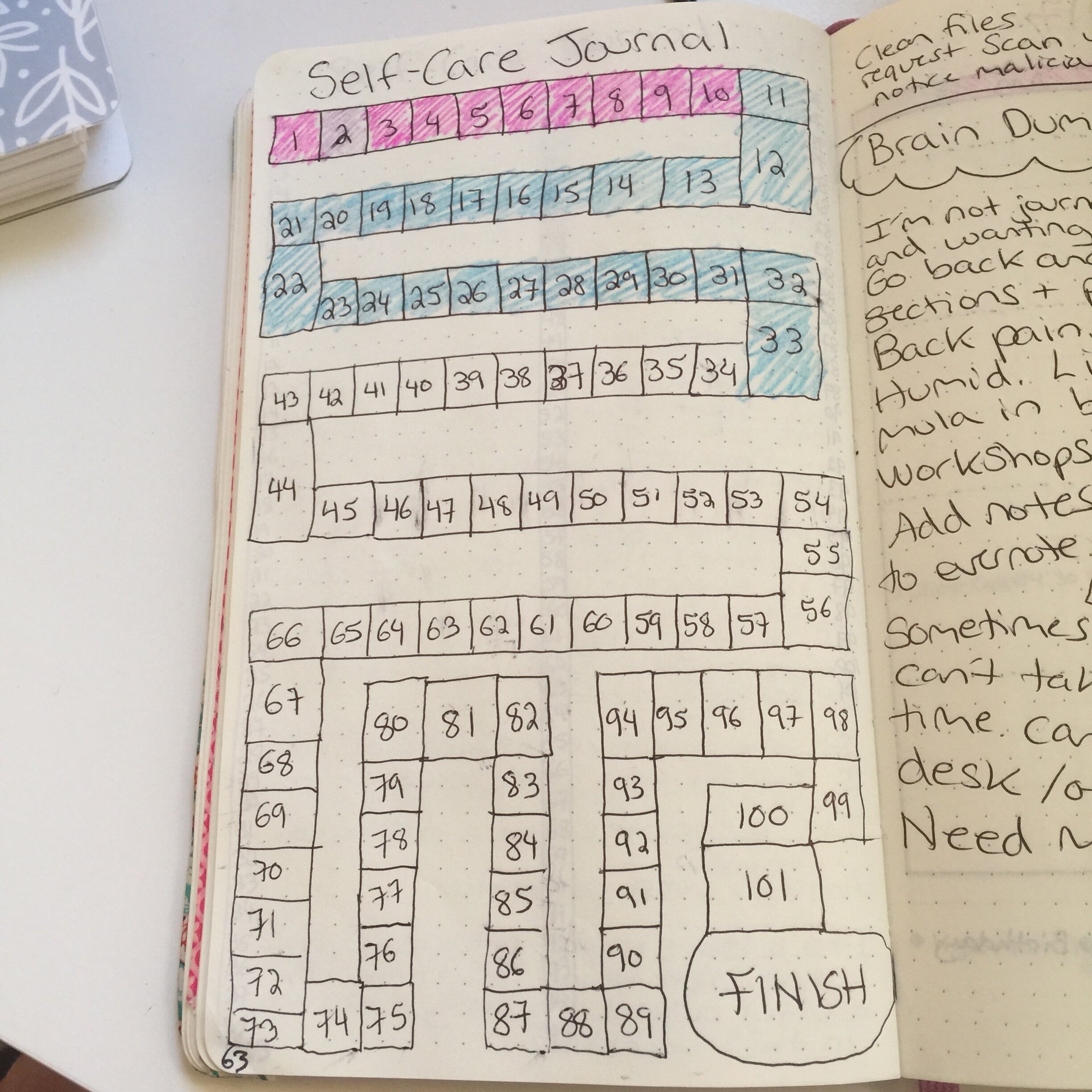
Effort compounds. Every small action you take brings you closer to your goal, even if progress feels slow. One way to stay motivated is by tracking your incremental achievements. This could be through a habit tracker, filling out your Journal, or visualizing your progress. Small actions add up, and by focusing on these micro-steps, you’ll find that you’re further along than you might have initially realized.
Walking Hand in Hand with Fear
While it’s tempting to want to conquer fear, there’s something even more powerful about walking alongside it. Rather than pushing fear away, let it sit beside you without letting it take control. When you acknowledge your fear, you’re no longer resisting it; you’re choosing to move forward with it by your side. This mindset allows for steady progress without the constant battle to be fearless.
So whatever that thing is—whether it’s writing a book, starting a business, or learning a new skill—remember that you don’t need to wait until you feel ready or fearless. Every small effort you make adds to your growth, and your personal journey has something unique to offer. Embrace the experience, accept the challenges, and see where each step forward leads you.
Mentioned during the show:
Robert Banister's Record-Breaking 4-Minute Mile
Marie Forleo interviews Elizabeth Gilbert
Memorable Quotes:
“What if you tried things for the sake of knowing what it feels like to fail at them?”
“What would change if you did things to have an experience?”
“Whatever it is that you really want...It’s worth considering what about the experience do you want to? What about the experience is different than the outcome?”
“When you take away the expectation, when you embrace the experience, things change.”
“When you know what you have to do to get what you want, then the barriers to getting there aren’t that bad, in fact, you want them because you know they will lead you to getting what you want.”
Progress Tracker Example
-
You're listening to episode four of the Mindful Productivity Podcast. And today I'm talking about why you should go for it anyway and why every effort you make actually does matter. So get ready because today's this episode is going to call out whatever it is in the back of your mind that you've been hesitating on. And fair warning. By listening to this episode, you may feel incredibly inspired, motivated, and excited to take a big step forward. Change can be scary and action steps toward known change require even more bravery.
I'm ready to dive in. Let's go.
Welcome to the Mindful Productivity Podcast. I'm your host, Sarah Steckler, and this is the place to be to live a more mindful and productive life. If you're ready to turn daily chaos into calm and start your days with intention, then get ready to join me. As we dive deep into mindful living and personal productivity. It's time to connect with your true self so you can live the life you want to live and it all starts now.
Are you looking for solid ways to live a more mindful and intentional life? I have just the thing for you. Join me in the Mindful Productivity Hub. This is my membership, community and course resource library full of meditations, intention setting practices and courses on goal setting, habit shifting self love, and more. Plus, it's growing every single month with more materials and members are finding ways to experience more space, time and productivity in their daily lives. I'd love to have you join to find all of the Info Head Mindful Productivity Podcast and click on the green button that says Join the Hub.
There you'll find all of the details. Make sure to use coupon Code podcast to get $10 off your first month and I'll see you inside. I need to be really honest. Sometimes when I record these podcast episodes, I get that feeling of, oh, no. People are going to judge me. What if people don't like this podcast? What if I get, like, some nasty email from someone or some comment on Facebook? Being just like this is awful. You should quit and that hasn't happened, will it? I don't know.
Maybe that person will show up today and make a comment. And have you ever noticed, too? How a lot of those people typically have, like household objects or like flowers as their profile picture? Whatever. But the point is we're always faced with fears. With what ifs with worries about things. And in today's episode, I really just want to tell you whatever you have going on in your mind, whether it's big or small, whatever thing that immediately comes to mind. When I say here's why you should do it anyway, whatever that it thing is, whether it's trying something new, whether it's quitting your job, applying for a job, asking somebody on a date writing that book.
I always say that everybody has a book in them somewhere. Whatever it is we're going to talk about why you should do it anyway, why you should move forward and work with your fear and how your fear can actually be showing you something that you might not have might not have been aware of before. I think I said that right. So we always have excuses. I have lots of excuses all the time for things that scare me or take me out of my cozy comfort zone.
I love my comfort zone. It's great. But if I never took a step out of it, I wouldn't be doing things. I mean, I could list all of them off, but you get it. And so let's talk about some of the most common excuses that we have these conversations that we have with ourselves. Often, whenever you're thinking about doing something or trying something, you might say things like it's impossible or it's going to be too hard. Or I don't have enough knowledge, resources, time or money.
And I'm just going to do this Valley Girl voice, because that's just what comes to me. I'm not saying that if people talk like this, they can't get what they want or do what they want. This is just the voice, the narrative that comes out of me when I think about excuses. So another thing we might say is like other people have already done it or other people could probably do it better than me. And I'd love to know in the comments on my website or wherever.
What is your excuse for not currently going after whatever it is that you really, really want? Because if you want something, you should be able to have it. If you really want something that brings fulfillment to your life, let's segue for a second here. I hate saying you deserve it as if we have this notion that we can only have things or be happy if we've worked for them, and if we deserve them, like if our actions have warranted them. Now, there's a big difference between entitlement when I'm talking about this, and that's not really where I'm going with this.
What I'm saying is we all have the right to feel happy and happiness and feeling fulfilled and feeling aligned doesn't mean that you have to spend your life doing things that you hate. That really bring out the worst in you or that make you feel less than that doesn't mean that you then deserve happiness. And what I mean here is that it's for you. It's always for you. There's never any way you should have to work for it. I hope that makes sense. And so when you're thinking about why you should go for it anyway and what I'm challenging you on today, I really want you to first get clear on what that thing is for me.
That thing was writing a book. That thing was starting a podcast, starting a blog, starting a business, applying for various scholarships throughout my life. Now all of these things I'm listing are now things I'm doing. And some people could say I'm not doing them well or that I'm crushing it, right. Whatever. But the point is that we have to get clear on that. And I want to tell you a quick story from my personal life and then a story from the to really hit this home.
When I was about, I think 14, I went out to what at the time was Wild Waves. I think maybe it's like Six Flags now or something. It was out in I think it's in Federal Way in Washington. It was kind of our Disneyland because we didn't have the money growing up to go to Disneyland. And Wild Waves was great. That's fine. And I'm happy about it. And I was okay not being surrounded by people in weird costumes, like, I was good with it. So we got a Wild Waves, and I'm with a friend.
I'm with my brother, and he has a friend, too. My brother is like, two and a half years younger than me, by the way. And there's this one ride there called the I Five Dive, and I think you guys, any Washington folks, any Pacific Northwest folks out there? I think you know what I'm talking about. I don't know if it's still there. I don't even know if Wild Waves, if that thing is still open. I haven't been there in that area for a minute. But anyway, there's a thing called the I Five Dive, and it's not included in the rides.
When you get a day pass, it's this thing you have to spend. I think it's like, I don't know, at the time, it's like maybe $30 extra for three people to go, and they basically strap you up in these suits. And then they put this, you kind of all lay down. And then in this big, I don't know, kind of like pocket thing for people, a people size pocket. And they pull you up 150ft. So you're basically laying down with your face down, like looking at the pavement below you to your death.
And then one person has to pull this rip hoard and you fall, you free fall for, I don't know, microsecond. And then you swing out. And I saw that. And I was like, no, there's no way I'm doing that. And then immediately, without even thinking, my mom goes, oh, I'm going to do that. So I'm like, 14. Right? And I look at my mom, who is at that point, I don't know, in her 40s. And I'm thinking in my 14 year old head, like, what? My mom is going to do this.
Okay. Well, if she's going to do this, then I'm going to do it. And it was a really interesting experience because I hate heights. I am not a fan of heights. And so we get in there. I'm getting all like, jazz. I'm getting in the little suit by the way it was, like me and my mom and my brother that did this, and I think I was in the middle. I Canva really remember. And anyway, we're all kind of similar in height at this stage in life.
And we get going. They tell us all the instructions. They let us know that there's going to be a woman at the bottom that's going to count down from three. And when she puts her hand down, that's going to be the call to pull the report. So we get up there and it feels secure at first, because the higher you go, the tighter this pocket thing gets around to all of you because it's pulling you tighter, higher up into the air. So we get to the top.
And this woman starts counting down, and I am suddenly just filled with fear. And it was so good that I wasn't the one that had the rip cord button or pulley because I don't think I would have pulled it. And I'm so curious to know, too, how often that happens, because I don't think they can do anything from the bottom. I think you have to pull it from the top. So I'm curious. Like, how many times people get stuck up there? I have no idea what an awful, awful feeling.
Anyway. So we get to the top, and the woman starts counting down, and I am just panicked. My whole body is like, fight or flight, right? And she gets to one, and she throws her hand down and my mom goes, oh, no, it's not working. And I go, what? And then she pulls it and we fall, and I think I'm going to die. I think I'm going to hit the pavement. And this is the end of my life. And, like, why we decided to volunteer for our death.
I have no idea. And we're falling, and I'm screaming, and then it catches us and we swing out over like, this little crowd of people that's waiting to go next, and we get down. I am shaking, and the guys that are working there go, yeah. So we've all been working here for, like, five years, and we've never heard someone ever scream that loud or scream with such a blood curdling scream before. So, yeah, Congrats on that. And I tell this story because it's like, I didn't think that I could do that.
And I didn't think that I would be able to do that until I was challenged to do it because my mom was doing it, and my ego was like, no, there's no way if my mom's going to do it, I have to do it. And sometimes we need that nudge. We get in our heads that we can't do something or that we're not brave enough. Side Note I wouldn't do it again. Like, I'm good. I've experienced that in my life, but I did definitely have a lot of excuses in my head before I threw them all out the window because I wanted to upstage my mom at the time, and she really upstaged me because she was really awesome about it and really brave.
And I don't even think she screamed so props to her. But we often come up with excuses, or we often have limiting beliefs about what we think we're capable of or how good we'll be at something. And so to share this second story with you back in the 40s, the record for running a mile was just over four minutes. I think it was like four minutes in 1 second. And for over a decade, this was like, kind of the barrier, like doctors. And people were like, humans can't run faster than four minutes.
It's physically impossible. Nobody can do it like, no, that's it. Don't try because you won't be any faster than four minutes. But Roger Bannister wanted to really prove everyone wrong, and he wanted to prove for himself that it could be done. And in May of 1954, he did, and he ran a mile, the first recorded mile at three minutes and 59 seconds. I think it was like, 0.4 seconds or something. 59.4. What's incredible about that is that he really had to do some incredible mindset work.
I'm sure there's articles that go more in depth, and I'll post a link that does a really great job telling the story better than I just did. But what's really amazing is that after he did that, after he ran a mile in under four minutes, people started doing it. Dozens of people within the next six months, eight months a year were able to run a mile in under four minutes. And what we believe about our capability is ultimately what we will do or not do. The beliefs that we have around what we're capable of or how well we'll do something will ultimately decide the outcome.
And it's because we will put in a different amount of effort depending on what our belief is right. Like, there's something to be said. And we could talk about the difference between cockiness and confidence and how to best utilize confidence and not be arrogant about our decisions. But there is something to be said about having an unwavering belief about your ability to do something. And one thing that's really interesting is that I recently wrote a book. It's a Journal, and it's going to be published. It's going to be in some bookstores.
And I've had a lot of people say, Bella, what? How did you do that? Like, how did you must have had something magical happen? And I go, no, you could do the same thing. You could write a book, you could get it published and people go, oh, I don't think so. And that's the thing is that when we do something anyway, in spite of our beliefs, we really can make things happen. And it's crazy. And there's this really amazing episode that Marie Forleo did with Elizabeth Gilbert on her program MarieTV it's on YouTube.
And I'll link this episode in the show notes as well. And she talks with Elizabeth Gilbert about writing. And if you don't know, Elizabeth Gilbert wrote Eat, Pray, Love, an accomplished author, an amazing human being. And she was saying as being a writer, being an artist, being a creative, you have to keep going because you're always going to feel like someone else could do this better or someone else has already done this. And here's the real quick side note to whatever it is that you want to do, I can pretty much guarantee you that someone else has done it.
And I can even tell you that someone else might do it better than you or already have. But that doesn't matter because you haven't done it. And so it's also worth considering before I go into this talking about this interview that they did, it's worth considering, too, the reasons for wanting to do something and really getting to that place of intrinsic desire, wanting to do it for yourself, not wanting to do it just to please other people or just to impress other people. Weighing the worst case scenario something one of my goals.
I've never publicly said this, but one of my goals in life is I want to do a stand up comedy session, like a comedy club, like at an open mic. I'm pretty sure I would bomb, but I want to do it because I want the experience of it. And there's part of me that thinks like, oh, what if I just got, like, one person to laugh really hard? That would be really cool. But then I also think about, like, what if I did it? And I bombed and no one laughed?
And maybe they even told me like, hey, Sarah, can you get off stage? Like, we've got other people here that are good at this. It would still be an experience. And so sometimes it's important to do things anyway, not just to do them, to succeed at them, but to do them because you want to experience what it might be like to fail at them and think about that for a minute. What if you did things? What if you tried things for the sake of knowing what it feels like to fail at them?
What would change then what would change if your expectation wasn't to be super perfect with something, but to instead just have an experience and see what you're capable of, see what happens. I always admire it. And those reality TV shows and stuff like, I'm a big fan of watching reality TV to kind of, like, unwind and stop working and get my mind off things. And one of my shows that I watch every now and then is married, a first site which gosh, it's so addictive. Basically, these people volunteer to get matched and then marry somebody, like, the first time they meet them, and they always have them do stuff on their honeymoon or whatever and go surfing or scuba diving or try something new.
And most of the time, they haven't done these things before or they haven't done wakeboarding or something. And so they're up there and they're falling and they're laughing, or sometimes they're getting frustrated. But the point is they're not doing these things because they want to be like a pro surfer or they want to be perfect. But they're doing it for the experience. And so when you think about whatever it is that you really want, it's worth considering. What about the experience? Do you want, too? What about the experience is different than the outcome.
And if you haven't listened to the last episode, episode three, where I talk about outcomes versus process, I dive a little bit deeper into some of these things, things to consider along the way. But it plays very well here, too. When you take away the expectation when you embrace the experience, things change. And it's worth confronting, too. If you are, let's say you want to paint and let's say you've never done it before and you want to enter a contest or go to a painting party.
And let's say you have the worst painting there, like, it's hands down bad. It's not even a subjective thing anymore. People are just like, that's the worst. You didn't even get the sun right. Like, is that a tomato? What even happened? You still did it, and that's the worst that happened. And you still had. I don't know why I said that you still had an experience. So to get back to this interview with Marie Forleo and Elizabeth Gilbert, ultimately, Elizabeth shares that if you want to do something and you want it more than anything or you know that the challenge of it is going to bring joy to your life, whatever that may be, you have to get clear on what your crap sandwiches are.
She didn't say crap, but that's what we are going to say here, guys, you have to get clear on what they are, and then you have to be ready to eat them, like, willingly, because here's the thing. When you know that what you have to do to get what you want, when you know what you have to do to get what you want, then the barriers to getting there don't really look like barriers anymore because you want those challenges and those barriers because you know that they are going to lead you to getting what you want.
So when you know what those crap sandwiches are you're like, hey, I'm ready. Let's go. I think she even said something like, hey, are you going to eat that? Because I know that if I eat that and if I deal with that, I'm going to get closer to the goal that I ultimately want. And here's the thing, too. Things don't have to always be all or nothing. In fact, every effort that you make towards something actually matters because it's propelling you forward. Sometimes I look back at little things I do little steps, and I'm like, it doesn't really matter, for example, and this is just a weird example.
But I have a bullet Journal, right? And I love it. But I haven't actually filled up one molecule bullet Journal like the whole way. And I keep thinking, Why am I even doing this? I'm not being super consistent with it, and it's never going to get filled up. But then every time that I write a page or I do something, it does get done. And the same thing happened with the book, the Journal that I'm publishing. I never thought that I was going to actually get it done.
And then every time I wrote a number of pages and I got one of the sections done, I got that much closer. And I actually wrote out in my bullet Journal like a bunch of blocks to my goal, to my outcome. And then every time I wrote one page, I would color it in. And that can be a really handy way to track your progress, too. If there's something that you're feeling like you shouldn't do it because you're not going to be the best at it, or you're not prepared enough, or you don't have enough knowledge of resources or whatever.
Like if you can get clear on what the micro steps are or how many steps you have to go, sometimes it can feel daunting to feel like, okay, I've got to take this many steps to hit ten K in a day, and that can feel like a lot. But then you walk your dog and you've got 3000 under your belt. So if you can map out something and you can give yourself a visual representation of it, and sometimes that can be a really powerful way to track your progress and see how far you've already went and how important all of your effort is.
Even if you're not perfectly consistent, you're still making progress every day every time that you do make effort. I also want to touch on the aspect of fear, the fear that comes up when we think that we're not good enough to do something, when we don't know that people will support us when we really want, we really have the strong desire to try something. But we just aren't because of fear. And there's this big thing I keep seeing where people say, Conquer your fear, punch fear in the face.
And that's great. But I think there's something even more powerful about walking hand in hand with your fear and having compassion for all of your emotions and saying, you know what fear? Maybe some of the things that you're saying are right. Maybe some of those things are true. Maybe I am going to bomb if I go do a stand up comedy open mic night. Maybe people are going to boo me off stage. Maybe that is true, but I'm not going to know that until I do it.
And when you walk hand in hand with fear, you're not pushing it to the side. Instead, you're saying, hey, let's go together, let's go. And that can be a little bit easier instead of it'd be like if you're getting in your car and fear is definitely trying to get in the passenger seat with you, and it keeps jumping up on your dashboard, and it keeps trying to open your passenger door and you keep being like, no, get out of your fear. I'm punching you in the face.
It's going to make driving really difficult. But if you say, all right, get in the car, but you can't drive. I'm in the driver's seat. You can sit there. It makes it a little bit easier, and so move forward with your fear in whatever way that looks, whatever it is. Today this week, this month, this year whatever has been on the back burner for you in terms of something that you want to do, I challenge you to think about why you're not doing it anyway, why you're not taking action toward a goal or an experience that's going to ultimately make you grow as a person.
There's no reason you can't do it. It's been so much fun having you on this episode today. If you'd like to see the show notes and get some of the links to some of the interviews and information I was talking about. Head to Mindful Productivity Podcast thanks so much for listening, and I'll see you next week.